
Communicators cannot build judgment if they only consume interpreted news
In the attention economy, questioning narratives and separating reporting from interpretation have become critical skills for comms
I’m pleased to feature a guest post by Morgane Danielou, Founder and CEO of Magañ Communication. Morgane is a communications and public affairs leader with over 20 years of international experience across public health, food systems, sustainability, research, education, and the nonprofit sector.
In this essay, Morgane argues that while creators, explainers, and citizen journalists now shape how many people understand the news, communicators still need to stay close to original reporting. It is a useful reminder for early and mid-career communicators: judgement is built by engaging with the source, not only with someone else’s interpretation of it.
When I asked my Master’s students how they consume the news, their answers were almost unanimous:
-- YouTube explainers, TikTok commentary, Instagram carousels, WhatsApp forwards, and the occasional podcast. Almost none of them mentioned opening a newspaper website or watching a traditional news bulletin.
Their habits perfectly mirror what the data has been telling us for years but hearing it directly from a classroom of 23‑year‑olds made it far more real for me.
The young and trendy media landscape
This shift is not happening only in my classrooms in Paris. Research shows a continued decline in engagement with TV, print, and news websites, while dependence on social media, video platforms, and aggregators grows. The Guardian recently reported how online creators are reshaping Africa’s news ecosystem, with influencers in South Africa, Kenya, and Nigeria blending commentary, humor, and personal storytelling in ways that feel more relevant to younger audiences than the evening news. In Nigeria, 65% of people use Facebook to share news, followed by WhatsApp and YouTube. Pew Research Center found that a growing share of Americans now “come across” the news rather than actively seeking it.
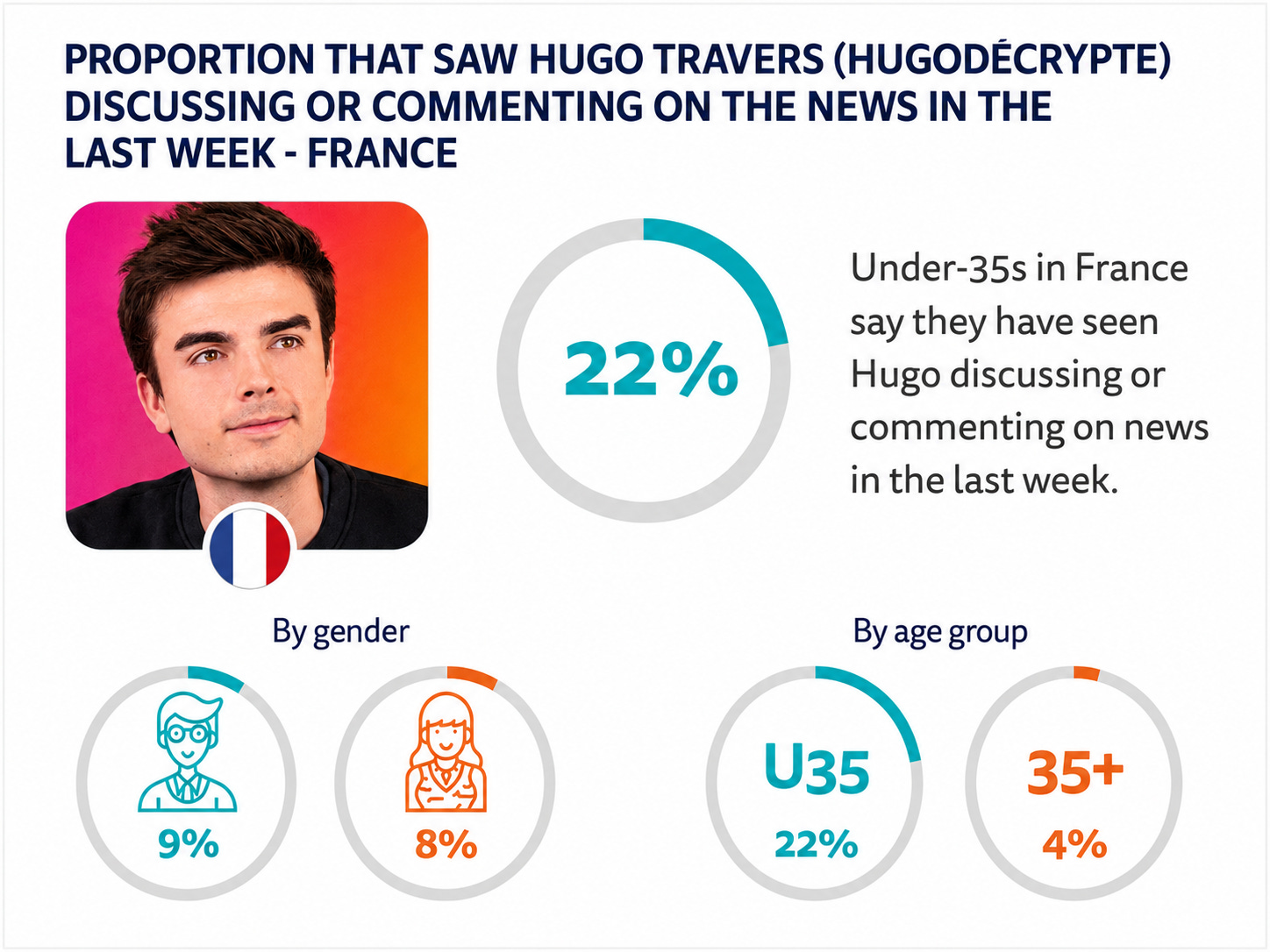
The data shows a profound transformation: news is increasingly mediated through interpreters rather than consumed at the source.
But commentary, explainers, and “POV” content are not the same as original reporting though.
While these types of content serve to make complex issues digestible, relatable, and often entertaining, they are interpretation and not original analysis. They rely on someone else having done the work of reporting, checking sources, contextualising, and challenging.
For communicators, this distinction is necessary to make because our professional judgment is at stake.
Why this is important for communicators
Communicators who depend only on news interpreters or citizen journalists weaken their ability to understand the full context behind a story, anticipate how different audiences might react, identify emerging issues before they trend, and evaluate the credibility of a narrative. But perhaps most important, it puts you at risk of crafting messages that are aligned with someone esle’s summary of reality.

Interpretations are filtered and could be full of stereotypes and biases. If we rely solely on creators, curators, and influencers, we risk losing the depth, nuance, and accuracy that come from engaging directly with good journalism.
If you’re always downstream of other people’s interpretation, how will you ever build your judgement?
Being well informed is the foundation of a communicators’ job to make sure that our comms is relevant, credible, and ethical. It is how we stay connected to the zeitgeist and how we serve our organisations, partners, and publics responsibly.
A practical “news diet” for early‑ and mid‑career communicators
My advice to early-career communicators is you do not need to read everything but you need a balanced intake of original reporting. A simple daily routine can make a significant difference:
Local news: What is happening in the community where your audiences live
National news: Politics, economy, culture, and policy debates
International news: Global trends, geopolitics, and cross‑border issues
Sector‑specific news: The outlets and journalists covering your field
Creators’ interpretations: To understand how audiences are reframing the news
Choose the formats you enjoy: newsletters, podcasts, short articles, long reads, documentaries. Follow journalists whose work you trust. Mix depth with breadth.
The goal is not volume but analysis.
Our responsibility to journalism
Communicators and journalists are interdependent. We depend on the reporting of journalists to do our work. Our role in turn is to support them by offering quality pitches, by respecting their craft, and by helping amplify their work rather than bypassing it.
As technology continues to transform how we communicate, the most valuable thing we can do as communicators is to stay close to the source and keep building our judgement.
Thank you, Morgane, for sharing such a timely reflection. You remind us that while the way people consume news is changing, the communicator’s responsibility remains the same: seeking context and questioning interpretation. Good judgement does not come from shortcuts.
1000+ communicators read Inclusion Notes every month. If you enjoyed reading this newsletter, please share with your network.
Thank you for publishing this, Ibukun — and for the framing around judgment specifically, which I think is the right word.
One thing I'd add from my work in public health and food systems: the stakes of secondhand interpretation are especially high in sectors where the science is contested or evolving. When a communicator builds their understanding of, say, agroecology debates or vaccine hesitancy through curated explainers, they often absorb the framing of whoever made the explainer — including their blind spots and biases — without realising it. That framing then shows up in messaging, in stakeholder briefings, in campaign strategy.
I've seen this play out most clearly when a journalist asks a question that the explainer never thought to address. A communicator who has read the original reports can engage. One who hasn't is suddenly exposed.