Introducing Inclusion Notes 2.0
Taking big swings at wicked problems

Traveling across Nigeria back in 2019 had a profound impact on me.
I witnessed firsthand how people coped with financial exclusion, with varying degrees of success.
I needed to tell those stories.
In 2022, my contract at Lagos Business School was coming to an end after 5 years of relentless brainstorming, media campaigns, and managing donor expectations. I finally had time to reflect on the things I'd witnessed and experienced.
And so, I started Inclusion Notes.
I set out to tell small-scale stories with potentially large-scale impacts. One of my favorite stories to write - Up North - captures my vision for this newsletter.
I've had a blast so far and I hope you've enjoyed reading these stories too.
In 2023, I joined CGIAR and my focus shifted to climate change and human security, which would seem like a separate universe.
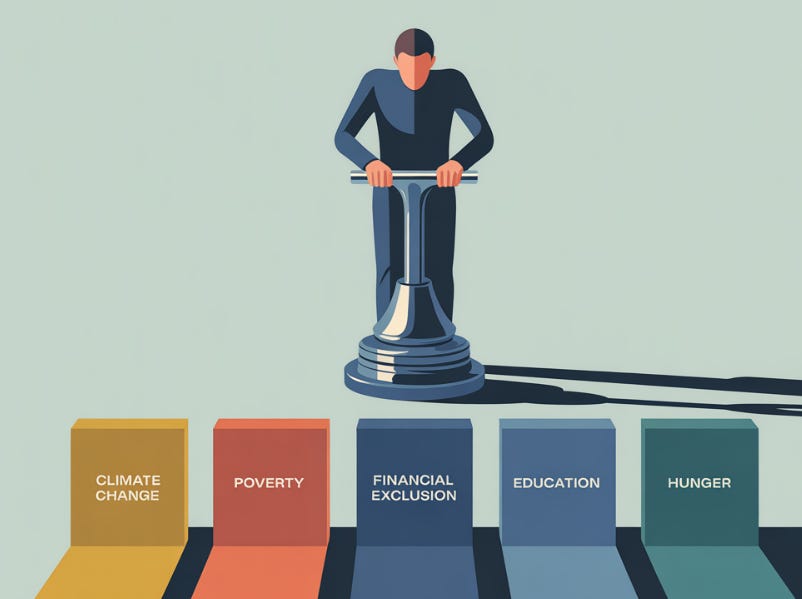
But to my surprise, both fields share crosscutting issues. The most vulnerable people:
have limited or no access to loans,
face systemic barriers to markets,
possess limited literacy,
Further complicating things, the solutions that stand a chance of making a difference in their lives are stifled by over-regulation.
These are what experts call "wicked problems"—systemic, vicious cycles.
It's been 8 years now working in international development and I've come to understand that these problems require big and bold swings.
So in the spirit of big swings, I'm expanding the scope of this newsletter beyond financial inclusion stories.
New Direction
Going forward, I'll also be teaching storytelling for impact.
Here's the rationale:
If you discovered something that could transform the lives of 1,000 people, how would you tell that story? What if it would transform 100,000 lives?
With such high stakes, your storytelling needs to be compelling, right?
Scientists make life-transforming breakthroughs all the time. Every year, journals publish hundreds of exciting scientific findings. However, the people those making these discoveries are rarely skilled storytellers.
A media-savvy researcher with great storytelling skills? That's practically a unicorn.
This isn't surprising.
Science comes with abundant jargon that makes it exclusive. People make similar complaints about lawyers and their legalese.
But this exclusive language isn't intentional or malicious.
I've worked with some of the best scientists—curious, passionate, kind souls who've been immersed in their fields for years. Jargon is simply their language.
For decades, the quest has always been to make science more inclusive to the non-scientific community. With the growth of AI tools, this is now easier than ever.
And so my mission, as I've chosen to accept it, is to join the effort to make science discoveries more inclusive. I'll do that by teaching scientists, researchers, analysts, and innovators how to craft and convey their discoveries to reach more people.
It’s exciting that we finally have a malaria vaccine and that cancer can be detected earlier than ever. But we need to share the failed trials, the eureka moments, the funding battles, the ethical debates and the hopes of the families who will benefit. Because facts stored in the head may impress, but stories that touch the heart move us beyond mere awareness to action.
This expanded vision aligns with the spirit of Inclusion Notes, which at its core is to tell under reported stories of challenges and solutions. This is how I can amplify my impact on a larger scale.
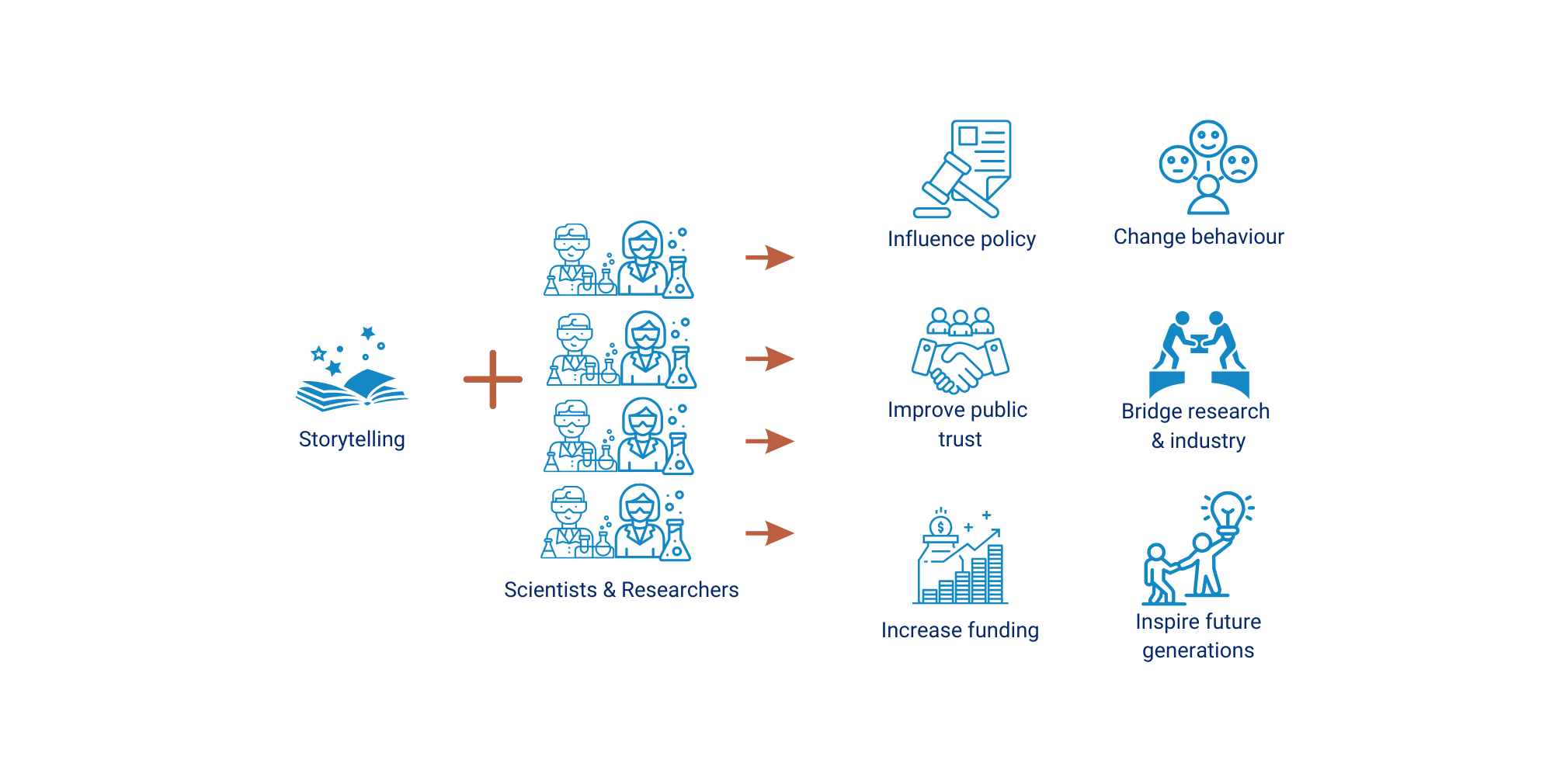
If you're a communications professional considering a career in STEM, international development, R&D, also join me on this journey. There's a lot for us to learn and share together.
What to Expect
I've been experimenting with this idea on LinkedIn for nearly three months, and the response has been exciting. However, LinkedIn has its limitations.
Through this newsletter, I'll explore my passion for science and share all I know about making evidence resonate deeply to ensure people pay attention.
Climate change, financial inclusion, poverty and hunger - experts have been working on these problems for decades and they’ve made important breakthroughs. We just need them telling their stories.
Financial inclusion remains my first love, and I'll continue writing about it, though stories will no longer be limited to Nigeria. My next story will examine financial inclusion in a Latin American community.
So going forward, Inclusion Notes will cover:
How to tell better science stories (for researchers and communications professionals)
Stories about financial inclusion from around the world
Some job opportunities (when I see them)
I promise to maintain the same quality of writing you've come to expect.
Thank you for staying with me over these three years. It only gets better from here.
Eagerly looking forward to 2.0 👏
Yay! I am excited about this pivot. Congratulations in advance on the big impacts you'll make.